
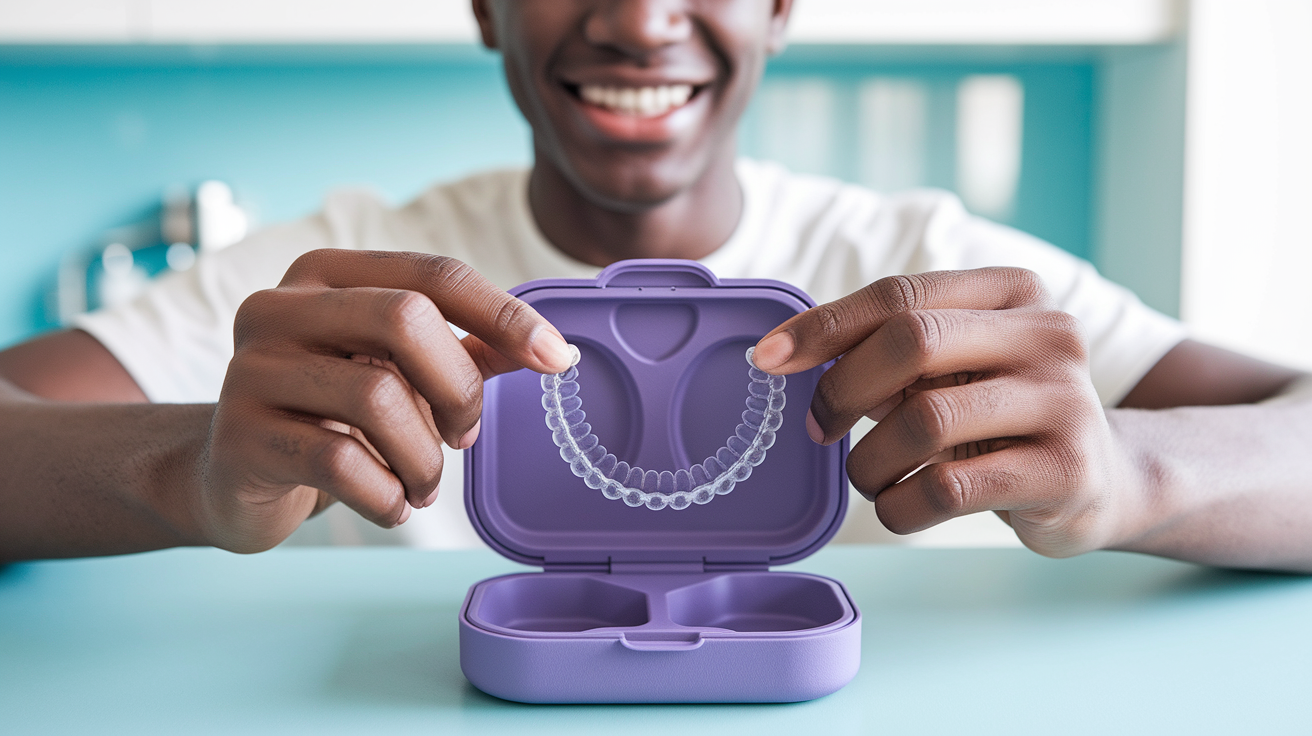
You finally made it—your braces or clear aligners are off, and you’re rocking a brand-new, straight smile. But before you start tossing confetti, there’s one more step in your orthodontic journey: retainers. This small but mighty dental tool is the unsung hero of your post-treatment plan.
Skipping your retainer is like quitting the gym after getting in shape. Without maintenance, all your hard work could slowly unravel—and those perfectly aligned teeth may begin to shift right back to where they started. Not on our watch.
TLDR – Quick Guide
- Retainers help lock in your new tooth positions after braces or aligners.
- Teeth naturally shift without them, especially in the first few months.
- There are two main types: fixed (permanent) and removable retainers.
- Most people need to wear them for years—some indefinitely at night.
- Skipping your retainer can lead to treatment relapse and costly fixes.
Detailed Breakdown
Why Do You Need Retainers After Braces?
When your teeth are moved into new positions with braces or aligners, the bone and tissues surrounding them take time to stabilize. Retainers help hold everything in place while your mouth adjusts. Without them, your teeth can drift back, undoing months—or years—of orthodontic work.
According to the American Association of Orthodontists, relapse (teeth moving back to their original positions) is common if patients don’t wear their retainers consistently.
How Long Do You Have to Wear Retainers?
The answer isn’t one-size-fits-all, but here’s the reality: most people should wear a retainer for life. Initially, you may need to wear it full-time (about 22 hours a day) for several months. After that, nightly use is usually enough to maintain your results.
Skip the retainer for a few nights? You might be okay. Skip it for a few weeks or months? Your teeth could shift noticeably.
Fixed vs. Removable Retainers: What’s the Difference?
- Fixed retainers are bonded behind your teeth and are always working. Great for people who might forget to wear a removable one.
- Removable retainers (like Hawley or clear plastic options) can be taken out for eating or cleaning, but require discipline to wear consistently.
Your dentist or orthodontist will recommend the best type based on your treatment and lifestyle. Many people use a combination of both for top and bottom teeth.
What Happens If You Stop Wearing Your Retainer?
If you ghost your retainer, expect consequences. Teeth move subtly at first, then visibly. Gaps can reappear, bites can shift, and you may feel discomfort or tightness when trying to wear your retainer again—a red flag your teeth are moving.
In some cases, patients who stop wearing their retainer may need to restart orthodontic treatment entirely. That’s a hard pass, right?
Retainer Care 101
- Clean removable retainers daily with a soft toothbrush and lukewarm water (not hot—it warps them).
- Store in a vented case when not in use.
- For fixed retainers, keep up with regular brushing and floss with a threader or water flosser.
Key Takeaways
- Retainers are non-negotiable if you want to maintain results from orthodontic treatment.
- Teeth have “memory” and will gradually shift back without consistent retention.
- Different retainer types suit different lifestyles, so discuss with your dentist which is right for you.
- The first year post-treatment is the most critical—don’t slack!
- Wearing a retainer is way cheaper and easier than doing braces all over again.
FAQs
1. Can I just wear my retainer at night?
Eventually, yes—but not right away. Most patients need to wear it all day at first, then transition to nightly wear after your dentist gives the green light.
2. What if my retainer feels tight?
That likely means your teeth have started to shift. Wear it as much as possible to get back on track and consult your dentist if the tightness doesn’t improve within a few days.
3. How often do I need to replace my retainer?
Removable retainers typically last 1–5 years depending on material and care. If yours cracks, warps, or no longer fits snugly, it’s time for a replacement.
4. Can retainers fix slight tooth shifting?
Sometimes. If the movement is minimal, wearing your retainer more often may help correct it. But for major shifts, you might need a new treatment plan.
5. Is it OK to skip wearing my retainer for a weekend?
It’s not ideal, especially right after treatment. Teeth can start to move quickly in the early months, so stick to your dentist’s guidelines religiously.