
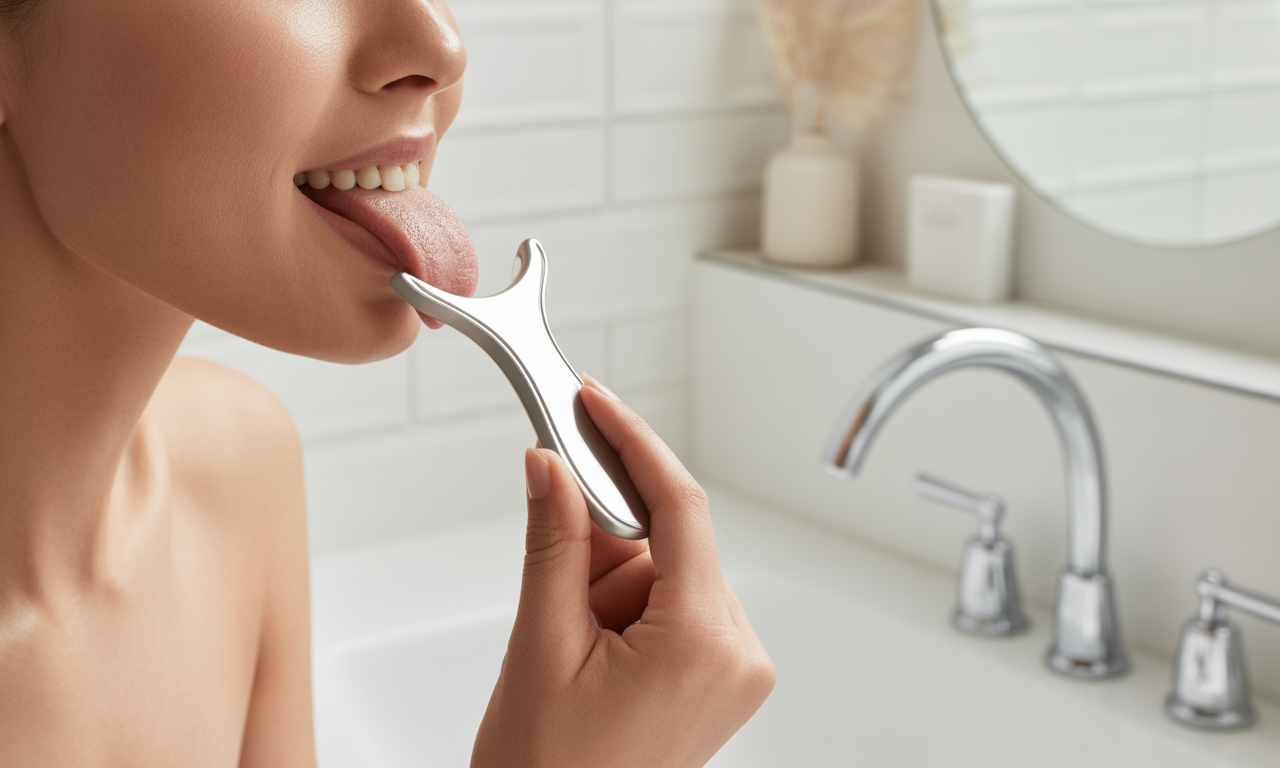
Most people brush and floss daily—but many overlook one simple step that could dramatically improve their oral health: tongue scraping. Your tongue is a breeding ground for bacteria, food particles, and dead cells, all of which contribute to bad breath and poor hygiene if left unaddressed. In this article, we’ll explain what tongue scraping is, why it matters, and how to do it properly to keep your mouth fresh, clean, and healthy.
TLDR Quick Guide
- Tongue scraping removes bacteria, food debris, and dead cells
- Helps prevent bad breath and enhances your sense of taste
- Reduces the risk of plaque buildup and gum disease
- Should be done daily as part of your brushing routine
- Simple, inexpensive tool with major oral health benefits
What Is Tongue Scraping?
Tongue scraping is the practice of gently removing buildup from the surface of your tongue using a specialized tool. This buildup, often called the tongue coating, harbors bacteria and debris that brushing alone doesn’t effectively remove.
Scrapers are typically made of stainless steel or plastic and shaped to comfortably glide along your tongue without damaging its surface.
Benefits of Tongue Scraping
1. Eliminates Bad Breath
One of the main causes of halitosis (bad breath) is the accumulation of odor-causing bacteria on the tongue. Scraping daily helps:
- Remove sulfur-producing bacteria
- Reduce overall bacterial load
- Freshen breath more effectively than brushing alone
2. Enhances Your Sense of Taste
A coated tongue dulls taste receptors. By clearing the buildup:
- Taste buds are more exposed
- Food flavors become sharper and more enjoyable
- Overall appetite regulation can improve
3. Reduces Plaque and Toxin Buildup
Tongue scraping helps prevent:
- Bacteria from transferring to teeth and gums
- Early signs of gingivitis or gum inflammation
- Toxins that contribute to systemic issues when swallowed
4. Improves Oral Hygiene Routine
Incorporating tongue scraping can boost the effectiveness of your entire routine by:
- Enhancing the results of brushing and flossing
- Making mouthwash more effective
- Promoting better overall oral health
How to Use a Tongue Scraper (Step-by-Step)
- Choose a scraper: Metal or BPA-free plastic works well
- Stand in front of a mirror and stick your tongue out
- Gently place the scraper at the back of your tongue (not too far to avoid gagging)
- Drag the scraper forward with light pressure
- Rinse the scraper under warm water
- Repeat 2–3 times or until the residue is gone
- Rinse your mouth afterward
Use your scraper once per day, ideally in the morning before eating or drinking.
Common Myths About Tongue Scraping
- “Brushing my tongue is enough.”
➤ While brushing helps, scraping is more effective at removing deeply embedded buildup. - “It’s painful or harsh.”
➤ When done correctly, tongue scraping is gentle and safe for daily use. - “Only people with bad breath need it.”
➤ It benefits everyone—not just those with noticeable breath issues.
Key Takeaways
- Tongue scraping is a quick, easy, and effective way to boost your oral hygiene
- It removes odor-causing bacteria and improves taste perception
- A daily scrape can help reduce your risk of gum disease and decay
- It’s a simple addition to brushing and flossing that delivers noticeable results
- For best outcomes, use a dedicated scraper—not your toothbrush