
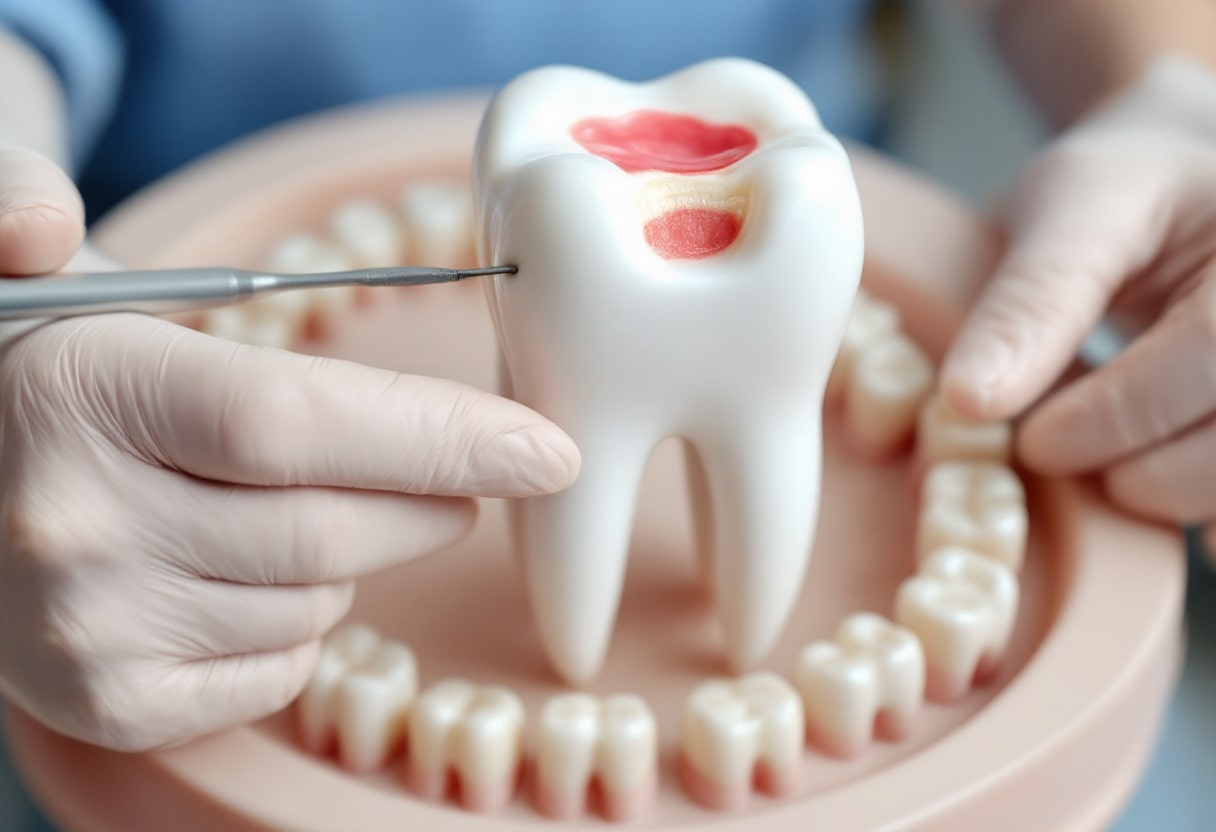
Cavities don’t always start with pain. In fact, by the time you feel discomfort, tooth decay may have already progressed. Catching cavities early can help prevent more serious dental issues and costly treatments. This guide will help you recognize the first signs of a cavity so you can take action before it worsens.
TL;DR: Quick Guide
- Look for tooth discoloration like white, brown, or black spots.
- Watch for unusual sensitivity to hot, cold, or sweet foods.
- Check for rough or sticky spots on your teeth.
- Pay attention to bad breath or a lingering bad taste.
- Visit your dentist for early cavity detection and treatment.
1. Tooth Discoloration
A healthy tooth should be uniform in color. Changes in shade or spotting can be an early indicator of decay.
- White spots on teeth may suggest demineralization, the first stage of a cavity.
- Brown or dark stains can indicate early enamel breakdown.
- Black spots may signal advanced decay, especially if they don’t disappear with brushing.
2. Sensitivity to Hot, Cold, or Sweet Foods
Sudden sensitivity could mean your enamel is wearing down, exposing the inner layers of the tooth.
- Discomfort when eating hot or cold foods suggests weakened enamel.
- A tingling or mild sharp pain after consuming sweet foods may indicate cavity formation.
- Sensitivity that lingers after eating or drinking is a strong sign of early decay.
3. Rough or Sticky Feeling on Teeth
Cavities often create surface changes that you can feel with your tongue.
- A rough texture or a small indentation can indicate enamel erosion.
- A sticky feeling when eating may suggest plaque buildup in the decayed area.
- If floss gets caught or frayed in a certain area, it might be due to a cavity forming.
4. Persistent Bad Breath or a Bad Taste
Cavities can trap bacteria and food particles, leading to unpleasant odors and tastes.
- Bad breath that won’t go away, even after brushing and flossing, could be due to decay.
- A persistent bad taste in your mouth may indicate bacterial buildup inside a cavity.
- If breath fresheners or mouthwash don’t help, it’s time to check with a dentist.
5. Gums That Appear Inflamed Near a Tooth
Gums may show signs of irritation when a cavity is forming beneath the surface.
- Swollen or slightly red gums around a specific tooth could indicate underlying decay.
- Mild discomfort or a slight bump near the gumline may suggest an infection is developing.
- Bleeding when brushing in one area could be linked to decay spreading beneath the enamel.
6. A Feeling of Pressure or Mild Discomfort
Cavities don’t always cause pain, but they can create a dull sensation.
- A slight pressure when biting down could mean enamel is wearing thin.
- A mild ache that comes and goes may indicate decay spreading.
- A sensation of something being stuck in your tooth might be caused by a small cavity.
Key Takeaways
- Cavities start with subtle signs like discoloration, sensitivity, or rough spots.
- Bad breath and gum irritation can be early indicators of tooth decay.
- Pain is not always the first sign—pay attention to minor discomfort or changes in texture.
- Seeing a dentist early can prevent more serious dental problems.
FAQs
1. Can a cavity go away on its own?
No, cavities don’t heal naturally. However, early-stage decay (white spots) can sometimes be reversed with proper care and remineralization.
2. How fast does a cavity develop?
Cavity progression varies based on diet, oral hygiene, and genetics. Some can develop in months, while others take years to become severe.
3. What does an early cavity feel like?
Early cavities may not be painful but can cause mild sensitivity, a rough spot, or slight pressure when chewing.
4. Can you see a cavity in the mirror?
Sometimes. Dark spots, holes, or changes in tooth color can be visible. However, cavities between teeth often require a dentist’s exam to detect.
5. When should I see a dentist about a possible cavity?
If you notice any signs like discoloration, sensitivity, or a rough feeling on your tooth, schedule a dental visit before it worsens.