
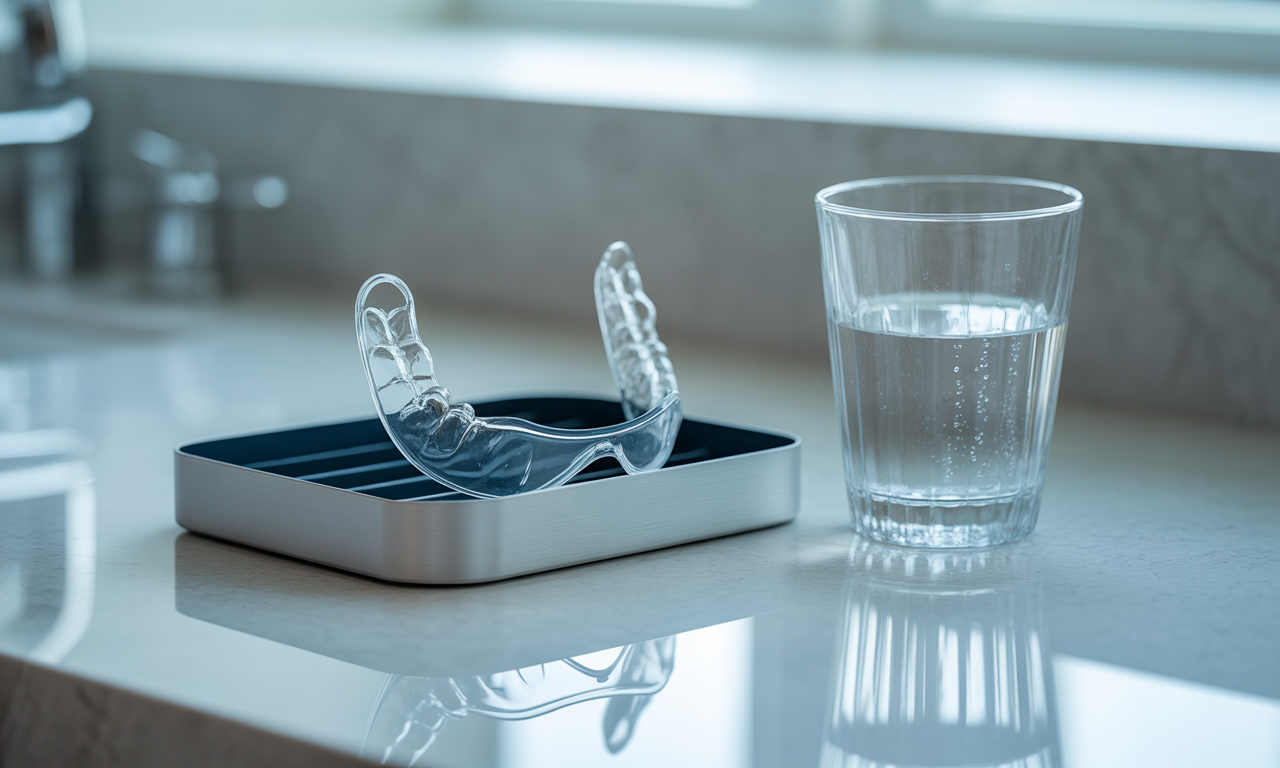
If you wake up with jaw tension, sore teeth, or mysterious headaches, you might be grinding or clenching your teeth at night—often without realizing it. Known as bruxism, this habit can cause serious damage over time. That’s where a night guard comes in. This simple, non-invasive device can be a game changer for protecting your teeth and relieving discomfort. Here’s how to tell if it’s time to talk to your dentist about getting one.
TLDR Quick Guide
- A night guard is a custom oral appliance worn during sleep to prevent grinding or clenching
- Common signs you need one include jaw pain, headaches, tooth sensitivity, and worn teeth
- Night guards protect against enamel damage, TMJ dysfunction, and cracked restorations
- Dentists can create custom-fit guards for maximum comfort and protection
- Early use prevents long-term oral health complications
What Is a Night Guard?
A night guard is a custom-molded dental appliance worn over your teeth while you sleep. It acts as a barrier between the upper and lower teeth to:
- Absorb the pressure from clenching
- Prevent grinding-related enamel wear
- Reduce stress on the jaw joints (TMJs)
Unlike over-the-counter options, a dentist-made night guard is designed for comfort, durability, and optimal fit.
Top Signs You May Need a Night Guard
1. You Wake Up With Jaw Pain or Soreness
Tightness, clicking, or soreness in your jaw in the morning can be a clear sign of nighttime clenching.
2. You Suffer From Frequent Headaches
Morning headaches—especially around the temples—often stem from overnight grinding and jaw tension.
3. Your Teeth Are Wearing Down
Flat, chipped, or sensitive teeth with no visible decay may be due to bruxism. Night guards help stop this wear before it progresses.
4. You’ve Cracked Fillings or Crowns
Grinding puts immense pressure on your teeth, often leading to fractured restorations. A night guard protects dental work from damage.
5. You Hear or Feel Clicking in Your Jaw
This could signal a developing TMJ disorder, especially when combined with bruxism symptoms.
6. Your Partner Hears Grinding Sounds at Night
Loud grinding can disturb sleep and is a clear indicator of unconscious nighttime activity.
How a Night Guard Helps
- Protects tooth enamel from grinding-related erosion
- Prevents dental damage to crowns, veneers, and fillings
- Relieves jaw tension and muscle fatigue
- Improves sleep quality by reducing muscle strain
- Helps manage TMJ symptoms and chronic pain
Custom Night Guard vs. Store-Bought: What’s the Difference?
| Feature | Custom Night Guard | Store-Bought Guard |
| Fit | Precise, molded to your bite | One-size or boil-and-bite |
| Comfort | High (worn long-term) | Lower (bulkier, less stable) |
| Durability | High-grade material, long-lasting | Often wears down quickly |
| Protection | Stronger, more effective | Limited bite alignment support |
| Cost | Higher upfront, longer lifespan | Lower cost, frequent replacement |
Bottom line: A custom night guard offers significantly better protection, especially for long-term bruxism cases.
Key Takeaways
- A night guard is an effective solution for people who grind or clench their teeth at night
- Symptoms like jaw pain, headaches, enamel wear, and broken restorations are red flags
- Custom guards offer the best fit, comfort, and long-term value
- Using a night guard early helps avoid costly dental repairs and chronic jaw issues
- Talk to your dentist if you suspect bruxism or TMJ problems
FAQs
Can a night guard stop grinding completely?
It won’t stop the behavior, but it will protect your teeth and reduce muscle strain during episodes.
How long do night guards last?
A custom night guard can last 3–5 years or more with proper care. Store-bought versions wear down much faster.
Is it uncomfortable to wear a night guard?
Custom guards are designed for comfort. Most patients adjust within a few nights.
Do night guards help with snoring or sleep apnea?
Not typically. Those conditions require specialized oral appliances—talk to your dentist for an evaluation.
How do I clean my night guard?
Rinse daily with cool water, brush gently with a soft toothbrush (no toothpaste), and store it in a ventilated case.